

Sheet metal fabrication turns out to be the process of utilizing sheet metal in order to construct metallic structures and machines. This is often a complicated procedure that has a number of stages involved and takes place in the hands of a range of sheet metal machinists. Those sheet metal fabrication companies are usually called by the name of fabrication shops, or using the simplified moniker fab shops.
Sheet Metal Fabricating Tools
The process of fabricating sheet metal typically revolves around burning and cutting the sheets of metal. There are a variety of specific and highly specialized tools involved. Some of these are band saws that cut through sheet metal. They have uniquely hardened blades which can cut evenly through the sheet metal as it is fed into them.
Another tool commonly deployed is the chop saw. These are much like miter saws, except that they possess a specially designed abrasive disk that easily eats through sheet metal. Other tools deployed are cutting torches. These cut up big metal sections effortlessly.
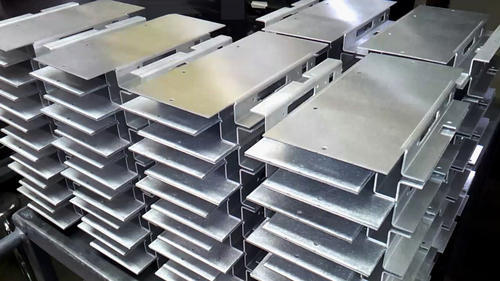
Hydraulic breaks will be a part of the process of fabricating the sheet metal too. This simplifies the process by bending the metal at appropriately pre-decided angles. Many shops also employ rolling machines in the fabrication process to help shape the steel to rounded sections.
Welding In Sheet Metal Fabrication
Welding is another principle part of the fabrication process. Once the parts of sheet metal have been properly formed, they will be put together before being tack welded to stay permanently. There are a range of welding technologies used which will ensure that no visual defects are present in the final product (like warping). Welding processes utilized include staggered welding, employing stout fixtures, sand covering the metal throughout the cooling process, and unique processes for straightening the metal.
The straightening process of warped steel can be done utilizing an Oxy-acetylene torch. Heat will be applied in linear and slow motion to the metal. Welders with great experience and capabilities can remove warping this way.
Finishing the fabrication process requires sand blasting the metal. Next the machinist will prime and paint it. At the end, finishing touches become applied to the customer’s precise specifications. The piece will be quality control inspected before it is shipped out to the client.

