

Welcome to 2026. It seems like only yesterday we were worried about our kids spending too much time watching YouTube videos on a tablet. Today, the digital landscape for our children is vastly more complex, immersive, and integrated into their daily lives.
Between AI-driven learning platforms, socializing in immersive VR gaming environments, and the ubiquitous connectivity of the “Internet of Toys,” the line between the physical and digital reality has blurred completely for Generation Alpha.
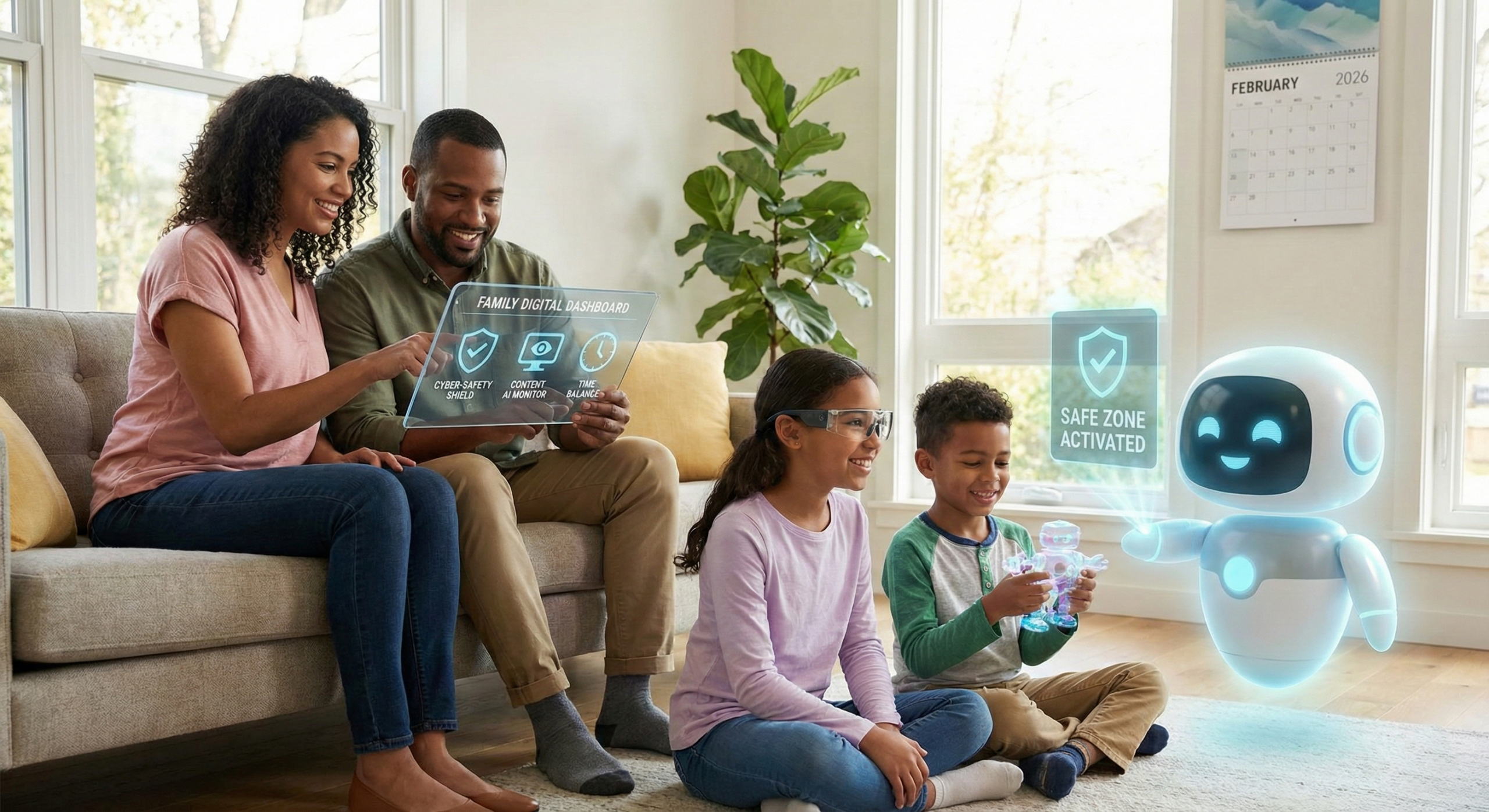
We can’t simply pull the plug; the digital world is where they learn, play, and connect. Instead, we need to evolve our parenting strategies to match the sophistication of the technology they use. Securing their online surfing isn’t just about blocking websites anymore; it’s about building digital resilience.
Here are the five critical pillars parents need to care about to secure their children’s digital space in 2026.
1. Cyberbullying 3.0: Beyond Text, Into Immersion
In 2026, cyberbullying has unfortunately evolved alongside technology. It’s no longer just about mean text messages or exclusionary group chats.
Today, we have to worry about “immersive harassment” in virtual reality gaming spaces, where avatars can invade personal space in ways that feel psychologically real to a child. Furthermore, the rise of easily accessible AI tools means we are seeing the disturbing trend of “deepfake bullying” where likenesses are stolen to create embarrassing or harmful fake content.
What to do in 2026: We must teach our kids that their digital footprint voice, image, and avatar needs protection. Encourage open dialogue whereby they feel safe reporting weird interactions in VR or seeing altered images of themselves without fear of having their devices confiscated. Empathy training is now as crucial as potty training.
2. Cybersecurity: The “Zero Trust” Mindset for Kids
Remember when teaching cybersecurity meant saying, “Don’t share your password”? That’s quaint now. In 2026, threats are hyper-personalized.
AI-powered phishing attacks can mimic the voice of a friend or a favorite teacher, tricking kids into clicking malicious links. Furthermore, their world is full of connected devices from smart watches to interactive learning robots each representing a potential entry point for data privacy breaches.
What to do in 2026: We need to teach a “healthy skepticism” or a “zero trust” mindset. Kids need to verify requests, even if they seem to come from trusted sources. Practically, this means normalizing Multi-Factor Authentication (MFA) and biometrics on even their gaming accounts. If a toy connects to Wi-Fi, parents must treat it like a computer and secure its settings.
3. Content Monitoring: Partnering with AI Assistants
The sheer volume of content a child consumes in 2026 is staggering. It is humanly impossible for a parent to manually review every immersive game level, every fleeting video, or every ephemeral message.
Fortunately, the tools have gotten better. Modern content monitoring isn’t just about keyword blocking; it relies on on-device AI that can analyze context, tone, and imagery in real-time to flag potential dangers like self-harm content, predatory behavior, or violent extremism, often without breaking end-to-end encryption protocols.
What to do in 2026: Utilize AI-driven monitoring tools that provide you with summaries and alerts rather than raw data logs. The goal isn’t to spy; it’s to have a digital smoke detector. When the AI flags something, use it as a conversation starter, not an immediate punishment.
4. Parent Control: The Unified Digital Dashboard
Five years ago, parents were juggling six different apps to manage three different devices. It was chaos. The demand for interoperability finally caught up to the tech industry.
In 2026, effective parent control means utilizing unified dashboards. These hubs allow parents to set boundaries that transcend individual devices. You can now set a rule that applies to the VR headset, the school tablet, and the gaming console simultaneously. It’s less about “blocking” and more about “throttling” access based on behavior and schedules.
What to do in 2026: Move away from device specific controls and invest in ecosystem-level solutions. Ensure your controls allow for “walled gardens” safe spaces where kids can explore freely without constant hovering—while keeping the gate locked to the wider, wilder internet.
5. Time Control: Managing “Digital Immersion” vs. Screen Time
The concept of “screen time” is outdated. When a child is using AR glasses to learn biology in the backyard, are they “on a screen”?
In 2026, the concern isn’t just the amount of time, but the intensity of immersion. Highly immersive VR and hyper-stimulating AI feeds can lead to “digital fatigue” faster than old media. We need to manage the psychological impact of prolonged immersion, ensuring their brains have time to reset in the analogue world.
What to do in 2026: Focus on “quality over quantity” metrics. Differentiate between creative time (coding, designing) and passive consumption (doom-scrolling). Most importantly, implement mandatory “hard breaks” periods of the day where the Wi-Fi is off, and physical activity or face-to-face interaction is required to recalibrate their nervous systems.
Conclusion
The digital world of 2026 is incredible, offering our children unprecedented opportunities for learning and connection. But it requires parents to upgrade their operating system. By focusing on these five pillars, we move from being digital gatekeepers to digital mentors, raising a generation that is not just safe, but savvy, resilient, and kind in the spaces they inhabit online.